Skip to content

For wholesale buyers, the most important question about a soft kettlebell is not only how it looks. The real question is what is inside, how the filling is sealed, and whether the product can keep its weight, shape, and safety after repeated use.
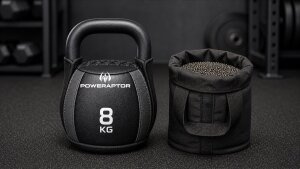
An iron sand filled soft kettlebell is designed for buyers who need a floor-safe alternative to cast iron kettlebells without making the product feel like a foam toy. The iron sand core gives the kettlebell real training weight, while the soft outer shell helps reduce hard impact on floors, racks, and crowded training spaces.
For distributors, gym suppliers, Amazon private-label sellers, and studio equipment buyers, understanding the filling system is critical before placing a bulk order. A soft kettlebell can be easy to sell when the structure is clear. It becomes difficult to sell when the buyer cannot explain the material, weight stability, or leakage control.
Why Iron Sand Filling Matters
Soft kettlebells are often compared with cast iron kettlebells, but they should not be positioned as a direct replacement. Iron kettlebells are still the right product for heavy strength rooms, outdoor use, and traditional hard-style training. Soft kettlebells are better for training environments where safety, noise control, floor protection, and beginner confidence matter.
Iron sand filling helps this product category feel more serious. Compared with lightweight foam or low-density filling, iron sand allows a compact soft kettlebell body to carry practical training weight. This makes the product more useful for home fitness packages, boutique gyms, hotel gyms, rehabilitation training rooms, school fitness programs, and beginner functional training zones.
For a B2B buyer, this means the product has a clearer commercial story. It is not a cheap soft copy of an iron kettlebell. It is a floor-safe weighted training tool for channels where hard metal products can create problems.

What Is Inside a Quality Soft Kettlebell?
A reliable soft kettlebell is usually built as a layered product. The outside shell provides appearance, grip comfort, logo space, and abrasion resistance. The internal structure controls the weighted material and helps prevent movement, leakage, and shape collapse.
For iron sand filled soft kettlebells, buyers should ask how the filling is contained. A better construction normally includes an inner filling bag, controlled iron sand volume, reinforced closure, outer shell stitching, and handle reinforcement. If the product only relies on a weak outer cover to hold all the weight, the risk of leakage and seam failure becomes much higher.
The handle area is especially important. During swings, carries, lifts, and group training, the handle receives repeated pulling force. If the handle is not reinforced into the body structure, the product may look acceptable in photos but fail during commercial use.

Leakage Control Is a Manufacturing Issue
Many overseas buyers worry about soft weighted products because they have seen sand leakage, weak seams, and uneven filling in low-grade products. This is a real concern. The answer is not simply to use thicker fabric. Leakage control depends on the full production method.
Poweraptor treats seam strength as a key manufacturing point. Reinforced stitching, stronger seam allowance, protected filling bags, and careful closure control are all important for repeat orders. For buyers, the important question is not whether a supplier says the product is high quality. The useful question is how the supplier prevents iron sand from escaping after repeated handling.
A good sample should be checked by shaking, pressing, turning, and weighing. Buyers should also inspect the stitching around the top cap, handle base, vertical side panels, and bottom edge. These are common stress points during real training.
Weight Accuracy and Product Feel
For wholesale programs, weight accuracy affects customer trust. If a buyer sells 4 kg, 6 kg, 8 kg, 10 kg, and 12 kg soft kettlebells, the actual weight should stay within an agreed tolerance. A small difference may be acceptable, but large variation creates problems for gym buyers, retail customers, and online reviews.
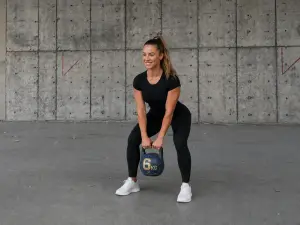
Filling balance is also important. The iron sand should not move so much that the kettlebell feels loose, hollow, or unstable. A soft kettlebell does not need to feel exactly like cast iron, but it should still feel controlled in swings, goblet holds, carries, and circuit training.
For private-label brands, this product feel can become a selling point. A stable, compact, floor-safe kettlebell is easier to position than a soft product that feels like a weighted bag with a handle.
OEM Branding and Retail Positioning
Soft kettlebells also give buyers more branding flexibility than cast iron products. The shell can support logo printing, weight labels, color panels, hang tags, carton marks, and retail packaging. This is useful for Amazon private-label sellers, fitness equipment retailers, and distributors building a complete functional training line.
For logo printing, Poweraptor recommends a clean flat 2D vector style. Screen printing should normally be controlled within three colors for stable bulk production. Complex gradients, 3D emboss effects, shadows, and texture simulations can look attractive in a digital mockup but may not perform well on curved soft surfaces.
Buyers should also match soft kettlebells with related products such as Power Bags, Bulgarian Bags, Soft Plyo Boxes, wall balls, and other fabric-based training tools. This gives a distributor a more complete container program instead of a single isolated SKU.
Questions to Ask Before Ordering
Before placing a wholesale order, ask the supplier what filling material is used, whether there is an inner filling bag, how the closure is reinforced, what the weight tolerance is, how the handle is attached, and whether the factory can provide sample photos before bulk production.
Buyers should also confirm logo file requirements, packing method, carton size, barcode needs, private-label packaging, and MOQ. For serious B2B sourcing, these details matter more than generic promises.
Work With a Soft Kettlebell Manufacturer
Poweraptor is a soft kettlebell manufacturer and bulk gym equipment supplier China serving distributors, gym suppliers, retailers, Amazon private-label sellers, and commercial fitness buyers. We focus on OEM and wholesale orders rather than one-piece personal customization.
If you are developing an iron sand filled soft kettlebell line, our team can help review weight range, shell material, stitching structure, logo placement, packaging, sample requirements, and related product combinations for your market.
Send your target weights, order quantity, logo file, packaging plan, and destination country to request a wholesale quote and sample discussion.